
Tour East Bali Culture for an Authentic Bali Experience
Tour East Bali Culture is a wonderful way to discover a quieter and more traditional side of the island. While Bali is famous for its beaches and lively tourist areas, East Bali offers a different experience through sacred temples, royal water palaces, traditional villages, and beautiful rural landscapes.
East Bali is especially interesting for travelers who want more than beautiful photos. The region gives visitors a chance to learn about Balinese history, spirituality, architecture, and local traditions while enjoying some of the island's most scenic surroundings. With a well-planned Tour East Bali Culture, you can visit Lempuyang Temple, explore the peaceful gardens of Tirta Gangga, discover Taman Ujung, and learn about traditional life in places such as Kusamba and Tenganan.
Why Choose a Tour East Bali Culture Experience
East Bali has a strong cultural character. The region is home to important temples, former royal sites, traditional villages, and communities that continue to preserve local customs.
A Tour East Bali Culture experience can therefore feel very different from a typical sightseeing trip. Instead of simply moving from one attraction to another, travelers can discover the stories behind the places they visit.
Mr Bali Tour offers an East Bali route that combines Lempuyang Temple, Tirta Gangga Water Palace, and Taman Ujung Water Palace. Another option includes Kusamba Village, where visitors can learn about traditional salt making. This combination makes East Bali a great choice for travelers who enjoy history and culture while still wanting beautiful scenery.
Tour East Bali Culture at Lempuyang Temple
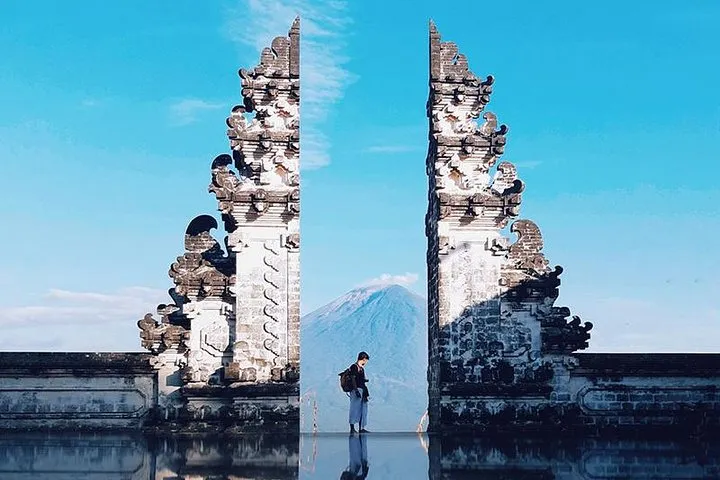
One of the best-known cultural landmarks in East Bali is Lempuyang Temple. The temple is famous among travelers for its iconic Gate of Heaven, but its importance goes beyond photography.
Mr Bali Tour explains that the temples around Mount Lempuyang are believed to predate many other Hindu temples on Bali. Pura Lempuyang Luhur is also part of the Sad Kahyangan sanctuary group, which holds an important place in Balinese Hindu tradition. This makes Lempuyang an important stop on a Tour East Bali Culture itinerary.
The temple is located on the slopes of Mount Lempuyang, giving visitors a chance to experience both cultural heritage and mountain scenery. The famous split gate also creates a dramatic view toward Mount Agung. However, Lempuyang should be approached as a sacred place rather than simply a photo location. Visitors should respect temple rules, dress appropriately, and behave respectfully while exploring the complex.
Tour East Bali Culture Through Sacred Traditions
Culture in Bali is closely connected with spirituality. For this reason, visiting temples can help travelers understand why religion plays such an important role in everyday Balinese life.
Lempuyang provides one example of this connection. Its temple complex is associated with spiritual balance and sacred directions within Balinese tradition. A Tour East Bali Culture journey can therefore be more meaningful when travelers take time to understand the cultural background of each destination.
Rather than rushing through the temple, take a moment to appreciate the architecture, surroundings, and atmosphere. Respectful travel makes the experience more enjoyable for both visitors and the local community.
Tour at Tirta Gangga
After Lempuyang Temple, Tirta Gangga is another major highlight of a Tour East Bali Culture itinerary.
Tirta Gangga is a former royal water palace associated with the Karangasem Kingdom. The complex features pools, fountains, gardens, stone carvings, and statues. Mr Bali Tour explains that the palace was originally built in the 1940s and was later restored after significant damage caused by the 1963 eruption of Mount Agung.
The name Tirta Gangga means water from the Ganges and has special significance for Hindu Balinese.
Walking through the water palace gives travelers a different perspective on East Bali's history. The combination of water features, gardens, and traditional architecture creates a peaceful atmosphere. It is also a beautiful example of how royal history and Balinese spirituality can come together in one destination.
Bali Culture Around the Royal Water Palace
Tirta Gangga is not only about gardens and fountains. Its history adds another layer to the experience.
The palace was created as a royal retreat and features carefully designed pools, fountains, sculptures, and landscaped areas. The surrounding East Bali countryside also includes rice terraces, adding natural beauty to the cultural setting. For travelers interested in history, a Tour East Bali Culture itinerary that includes Tirta Gangga can provide a closer look at the legacy of the Karangasem royal family. The peaceful environment also makes it a nice contrast to the more active atmosphere around popular tourist attractions.
Tour East Bali Culture at Taman Ujung
Another destination that can add historical depth to your Tour East Bali Culture journey is Taman Ujung Water Palace.
Also known as Taman Soekasada Ujung, the complex was built by the King of Karangasem. Mr Bali Tour explains that it was developed as a resting place and a location for entertaining important guests.
The site combines architecture, water features, and landscaped surroundings. As you explore the complex, you can see another side of East Bali's royal history. Visiting Taman Ujung together with Tirta Gangga also creates a natural cultural route. Both destinations are connected to the history of Karangasem, yet each has its own atmosphere and architectural character.
Tour East Bali Culture in Kusamba Village
For travelers who want to discover local traditions, Kusamba Village offers another interesting perspective.
Mr Bali Tour's East Bali itinerary includes Kusamba as an optional stop for travelers who want to see traditional salt making. The village is described as a traditional fishing community where salt farmers use natural techniques involving sun and wind evaporation.
This kind of experience adds something different to a Tour East Bali Culture journey.
Instead of only visiting major temples and royal landmarks, travelers can also learn about traditional livelihoods. It gives the trip a more everyday and local perspective. That balance between important heritage sites and traditional community life can make East Bali especially memorable.
Bali Traditional Heritage
A Tour East Bali Culture can become even more interesting when you look beyond the famous landmarks. East Bali is not only about temples and royal water palaces. The region also has traditional communities and local practices that give visitors a closer look at Balinese heritage.
Kusamba is a good example. The village is known for traditional salt farming, where local farmers use sun and wind evaporation to produce natural salt. The village is also described by Mr Bali Tour as a traditional fishing community on the black-sand coast of East Bali.
Experiences like this can make a cultural journey feel more connected to everyday life. Instead of only seeing historic buildings, travelers can also learn about traditional work and local communities.
Tour East Bali Culture With Beautiful Scenery
Culture and nature often come together in East Bali. That is one of the reasons the region can be so enjoyable to explore.
At Lempuyang Temple, the mountain setting creates a dramatic background. Around Tirta Gangga, visitors can see gardens and rice terraces. At Taman Ujung, the water palace combines historic architecture with views of the sea, hills, forests, Mount Agung, and surrounding rice fields. This combination gives a Tour East Bali Culture itinerary plenty of variety.
You can spend one moment learning about Balinese spiritual traditions and the next enjoying a peaceful landscape. As a result, the trip does not feel like a history lesson. It becomes a visual and cultural journey through one of Bali's fascinating regions.
Tour East Bali Culture at Taman Ujung
Taman Ujung deserves special attention because of its connection to the former Karangasem Kingdom.
The water palace was developed during the reign of the King of Karangasem and was originally used as a resting place and a location for welcoming important guests. The complex includes pools, gardens, and historic buildings.
Walking around the area gives travelers an opportunity to see how royal architecture was combined with natural surroundings. The site also has an interesting history. Parts of the complex were damaged by the eruption of Mount Agung in 1963 and later earthquakes. Restoration and reconstruction efforts helped preserve the site for visitors today. For anyone interested in history, architecture, and photography, Taman Ujung can be one of the most memorable stops on a Tour East Bali Culture journey.
Bali Culture Through Karangasem Heritage
Tirta Gangga and Taman Ujung have another connection that makes them especially interesting together. Both are linked to the history of the Karangasem royal family.
Tirta Gangga was built as a royal water palace, while Taman Ujung was developed as a royal retreat and place for receiving guests. Visiting both gives travelers a broader look at the architectural heritage of East Bali.
This makes a Tour East Bali Culture route more meaningful because the destinations are not just separate attractions. Their history helps connect the different stops into one story.
Instead of simply taking photos and moving on, travelers can pay attention to the architecture, water features, gardens, and historical background.
Tour for Curious Travelers
A cultural trip does not have to feel serious or complicated.
You can enjoy the scenery, take photos, walk around historic sites, and learn something new along the way. East Bali works particularly well for travelers who are curious about how Balinese culture, spirituality, royal history, and traditional livelihoods come together.
A Tour East Bali Culture can also be a refreshing change from spending the entire holiday around Bali's busiest tourist areas.
The pace can feel more relaxed, especially when the itinerary includes scenic locations such as Tirta Gangga and Taman Ujung.
How to Plan Your Tour
Before starting your Tour East Bali Culture, decide which experiences matter most to you.
If you are interested in Balinese spirituality, Lempuyang Temple can be an important part of the route. If royal history interests you, Tirta Gangga and Taman Ujung offer plenty to explore. Meanwhile, Kusamba can introduce you to a traditional local livelihood through its salt-making heritage.
It is also worth considering the travel time between destinations. East Bali covers a large area, so a realistic itinerary can make the experience more comfortable. Mr Bali Tour lists its Gate of Heaven and Water Palace tour as a one-day trip with an early morning pickup. The route covers Lempuyang Temple, Tirta Gangga, Taman Ujung, and Kusamba.
Planning the route in advance helps you enjoy each destination without feeling like you are constantly rushing.
Why Choose Mr Bali Tour for Your Journey
Mr Bali Tour offers an East Bali itinerary that brings several cultural and scenic attractions together in one trip.
Its Gate of Heaven and Water Palace tour includes Lempuyang Temple, Tirta Gangga, Taman Ujung, and Kusamba. The tour is listed as a private experience and includes an English-speaking professional, transportation, entrance fees, lunch, mineral water, and other listed inclusions.
The company also states that its tours are flexible and cover different areas of Bali. This can be useful for travelers who want to explore the island through experiences that match their interests.
For a Tour East Bali Culture, having several cultural and historical locations connected in one route can make the journey easier to enjoy.
Final Thoughts on Tour East Bali Culture
A Tour East Bali Culture is a beautiful way to discover a side of Bali filled with history, spirituality, traditional communities, and scenic landscapes.
From the sacred atmosphere of Lempuyang Temple to the royal gardens of Tirta Gangga and Taman Ujung, every destination offers a different story. Kusamba adds another perspective by showing the traditional salt-making heritage of the local community.
East Bali is therefore more than a collection of beautiful places. It is a region where culture and nature come together naturally.
If you want to explore Bali beyond the usual tourist route, East Bali can be a rewarding choice. With a thoughtful itinerary, you can enjoy beautiful scenery while gaining a deeper appreciation of the island's heritage and traditions.
